
The polo game
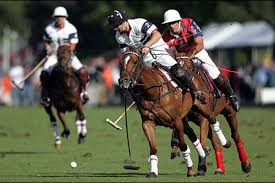
The game’s rules:
The rules of the game are essentially aimed at persevering the safety of players and horses.If the player is allowed to hinder (mark) a player by pushing him shoulder to shoulder, try to hang his mallet to prevent him from hitting the ball, it is forbidden to cut the line materialized by the trajectory of a ball moving forward of the last player who has just hit it, zigzagging in front of an opponent or approaching it for marking at open an angle of trajectory.
History:
It is not possible to determine precisely where and when the polo game appears. It is considered that it appeared about 2500 years ago among the horsemen of the steppes of Central Asia, however ti is in Persia that the first traces of this activity are noted. It is the first game of balls and mallet of the word and perhaps according to some historians the oldest of team sports.
Some players:
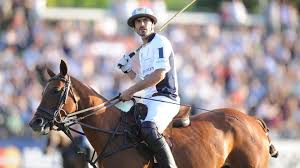
Adolfo Cambiaso, born April 15, 1975 in Cañuelas in the province of Buenos Aires, is a polo player, one of the best in the world.

Bartolomé Castagnola ( born June 16, 1970 in Lomas de Zamora, Buenos Aires province) is an Argentinan polo player with a 10-goal polo handicap and ranked among the top 20 players. It is often called Lolo.

Lucas Monteverde born December 18, 1976, is an Argentine professional polo player with a handicap of 9 (formely 10).
The field hockey:
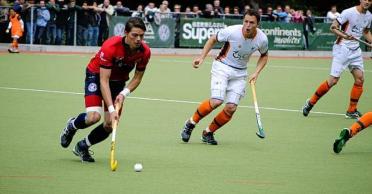
The 10 Essential Rules of Field Hockey
- A goal is scored when the ball has completly crossed the goal line after being played by an attacker in the circle
- A match at the senior and international level lasts two periods of 35 minutes, with a break of 10 minutes. At the junior level, a half-time lasts between 10 and 30 minutes (dependig on the category)
- The stock has a flat face and a domed face. The control of the ball is allowed only with the flat face
- Players do not have the right to play the ball of the foot, and in general, with no part of the body
- it is forbidden to prevent an opponent from playing the ball, obstructing his body or with the cane
- The goalkeeper in his circle can use all parts of his body to stop the ball. If he leaves the circle, he is considered a fiel player
- A short corner is awarded: when there is a voluntary foul by the defense in the zone of 22 meters; When a defender commits a fault in his circle that does not prevent a goal; When the defender internationally returns the ball behind its bottom line
- A penalty is awarded when a defender commits a voluntary foul in his circle which prevents a goal from being registered
- The referee can sanction a player with three boxes of various colors: green, simple warning, yellow, exclusion of player sanctioned for at least 5 minutes: Red, final exclusion of the sanctioned player
- Golden rule: Fiel hockey is a fair-play sports in which violence and blows are reprimanded
History:
It is practiced to eleven players, including a goalkeeper,exactly like football. The playing surface, once grass today more often in synthetic, also borders the dimensions of a football pitch. But the similarities and there. In hockey, the ball is much smalller, harder, and players can not use the feet to move it forward. Everything is played with a stick. And even ! Unlike ice hockey where both sides of the sick can be used, field hockey limits contact with the inside of the butt, requiring players to be very skilled. And to shoot, you have to be inside an area that surrounds the quards cage. In short, field hockey is one of a kind.
Field hockey is one of the oldest sports, the origin of which dates back more than 1200 years before the Games of Antiquity in Olympia. Indeed, according to historians, hockey was already practiced in many of the early civilizations. The Arabs, Greeks, Romans, Persians and Ethiopians played hockey in different forms. Several centuries before the discovery of the New World, the Aztec Indians devoted themselves to this sport in Central America. The Araucanians of Argentina practiced a sport very similar to hockey called « cheuca » which, they believed, would allow them to become great warriors.
Players
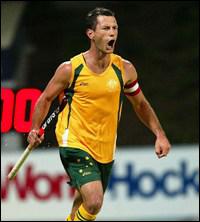
Louis Charles Baillon, born on 5 August 1881 in Fox Bay, Falkland Islands and died September 9, 1959 in Brixworth, England, is a British field hockey player. At the 1908 Summer Olympics in London he won the gold medal for the first appearance of the sport on the Olympic program.
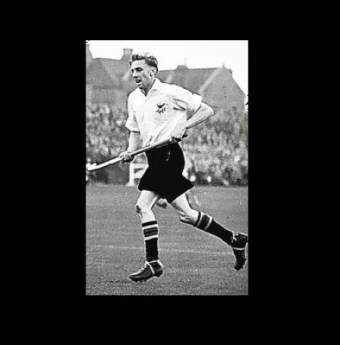
Denys Carnill was part of the British Bronze Medalist bronze selection at the 1952 Summer Olympics in Helsinki.
 Typically British sports